
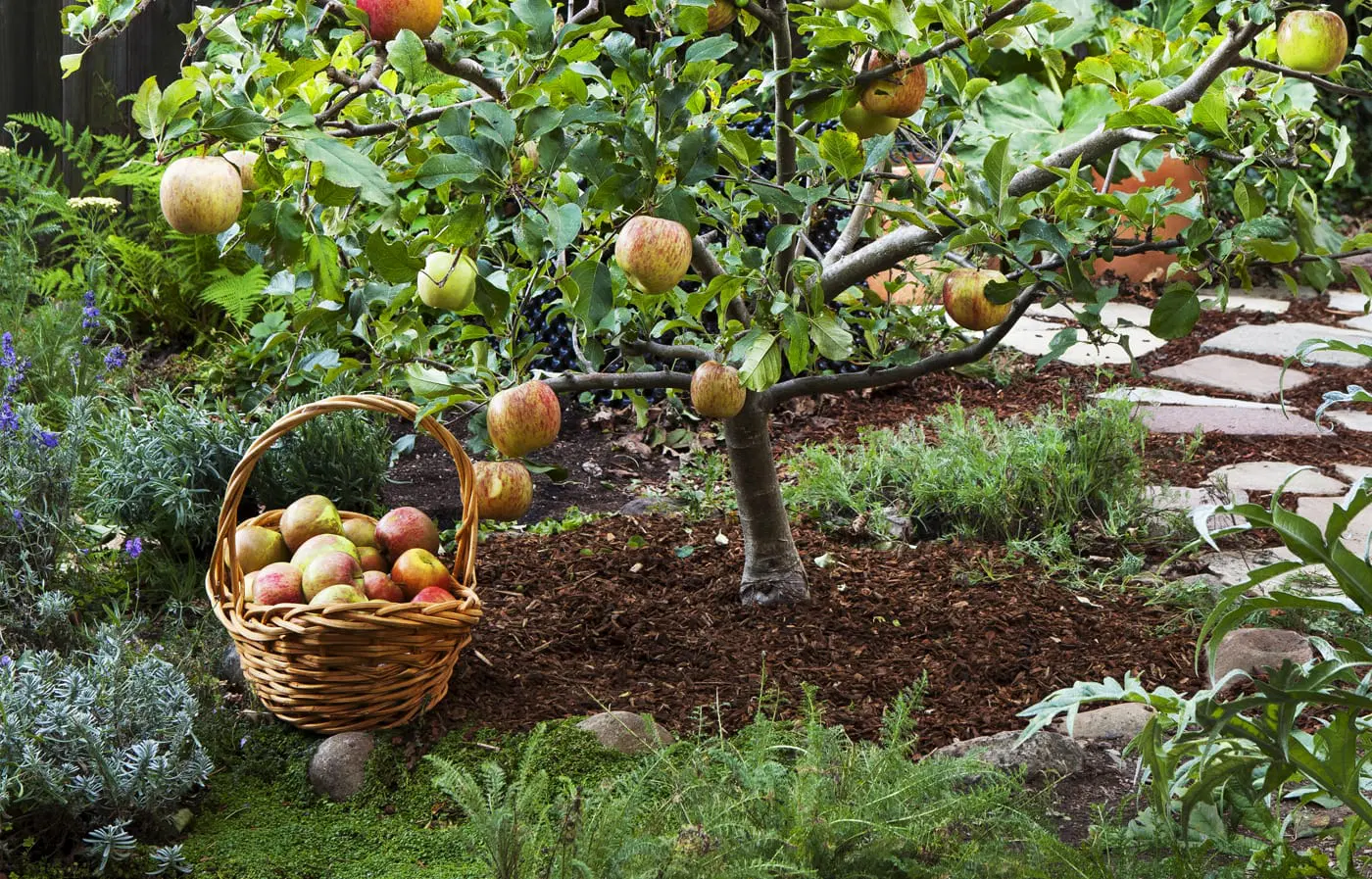

Rootstocks, the lower portion of a grafted tree that includes the roots and base of the trunk, play a big role in determining the size, vigour, and productivity of fruit trees. By selecting the appropriate rootstock, even those with small gardens or patio spaces can enjoy a bountiful harvest of apples or other fruits without the trees overwhelming their plot. This article focuses on the top three rootstocks ideal for small gardens, specifically for apple trees, which are among the most popular fruit trees for home cultivation in the UK. The information is tailored to British gardeners, considering local climate, soil conditions, and practical gardening needs. A specialist from CRJ FruitTrees, a reputable nursery that can be found at this website, provides commentary on choosing rootstocks for compact spaces. For those looking to buy fruit trees, this guide offers practical insights to ensure success in small-scale gardening.
Rootstocks and Their Importance
Fruit trees, particularly apples, are typically grafted, combining a scion (the fruit-producing upper part) with a rootstock (the root system and lower trunk). The scion determines the fruit’s characteristics, such as flavour and size, while the rootstock controls the tree’s growth rate, mature size, and adaptability to soil and climate. In small gardens, where space is at a premium, dwarfing or semi-dwarfing rootstocks are essential to keep trees manageable while still producing a viable crop. These rootstocks restrict the tree’s vigour, ensuring it remains compact, often under 3 metres in height, making harvesting and maintenance easier without ladders. Additionally, rootstocks can enhance precocity (early fruiting), disease resistance, and suitability to specific soil types, all of which are crucial for urban or small-scale gardeners.
The history of rootstock development, particularly for apples, began centuries ago but was formalised in the early 20th century at research stations like East Malling in the UK. These efforts resulted in a series of rootstocks, labelled with codes such as M27, M9, and M26, which are now widely used for their size-controlling properties. For gardeners looking to buy fruit trees, understanding these rootstocks is key to selecting varieties that fit their space and growing conditions. The following sections detail the top three rootstocks best suited for small gardens, focusing on their characteristics, advantages, and practical considerations.
M27: The Ultra-Dwarfing Rootstock
The M27 rootstock, often referred to as the most dwarfing apple rootstock, is ideal for gardeners with very limited space, such as patios or small urban gardens. Trees grafted onto M27 typically reach a mature height of 1.2 to 1.8 metres, with a spread of about 1.5 metres, making them perfect for container growing, dwarf pyramids, or stepover forms along garden edges. This rootstock allows gardeners to plant multiple trees in a confined area, creating a mini-orchard effect without dominating the garden.
One of the primary advantages of M27 is its precocity, with trees often bearing fruit within two years of planting. This early fruiting is a significant benefit for gardeners eager to enjoy their harvest quickly. The apples produced are standard in size, despite the tree’s compact stature, ensuring a satisfying yield for the space occupied. M27 is particularly suited to fertile, well-drained soils, and the ground around the tree must be kept weed-free, often with mulch, to prevent competition for nutrients. However, M27 requires permanent staking due to its shallow root system, which can struggle to anchor the tree, especially under heavy crop loads or in windy conditions. Regular watering is also essential, as the small root system is less resilient to drought.
Despite its advantages, M27 has limitations. It is not ideal for poor or shallow soils, and its small size means yields are lower compared to larger trees. In the average garden, M27 can sometimes overproduce in one year, leading to biennial bearing (fruiting every other year), which requires careful pruning to manage. For gardeners seeking to buy fruit trees for a small plot, M27 is an excellent choice for container-grown apples or highly restricted spaces, but it demands attentive care to maintain health and productivity.
M9: The Versatile Dwarfing Rootstock
The M9 rootstock is one of the most widely used dwarfing rootstocks for apple trees, particularly in Europe, and is a top choice for small gardens. Trees on M9 typically grow to 1.8 to 2.4 metres in height with a spread of about 2.7 metres, making them suitable for bush, pyramid, cordon, or espalier forms. Introduced in 1917 at East Malling Research Station as a classification of the French Paradise rootstock, M9 has a long history of reliability and is valued for producing slightly larger apples than other rootstocks, despite the tree’s compact size.
M9’s strengths include its precocity, with fruit appearing two to three years after planting, and its high productivity relative to its size. It is particularly effective for cordon training, where trees are grown as single stems with short fruiting spurs, maximising space efficiency. M9 is adaptable to good, fertile soils but requires weed-free conditions and regular irrigation, similar to M27. Like M27, M9 trees need permanent staking due to their weak root systems, which can be a drawback in exposed or windy locations. Additionally, M9 is less resistant to fire blight and not particularly winter-hardy, making it less suitable for colder or disease-prone areas.
For British gardeners, M9 is a practical choice for small gardens with good soil conditions. Its compact size and ability to produce a reliable crop make it a favourite for those looking to buy fruit trees for home orchards. However, gardeners must be vigilant about pest damage, as M9’s bark is attractive to mice and rabbits, particularly in winter. Protective measures, such as tree guards, are recommended to prevent damage. M9’s balance of size control, productivity, and versatility makes it a standout option for urban gardeners seeking to maximise their space.
M26: The Semi-Dwarfing Solution
For gardeners with slightly more space but still seeking a compact tree, the M26 rootstock offers a semi-dwarfing option, producing trees 2.5 to 3.5 metres tall with a spread of about 3.6 metres. Developed from controlled crosses at East Malling, M26 is more vigorous than M9 but still suitable for small gardens, particularly for bush, pyramid, cordon, or espalier forms. It is a versatile choice for those who want a slightly larger tree than M9 allows but without the overwhelming size of standard rootstocks like MM106 or M25.
M26 is highly precocious, often bearing fruit within three years, and is productive, making it suitable for gardeners aiming for a consistent harvest. Unlike M27 and M9, M26’s stronger root system means it may not require permanent staking in sheltered locations, though support is recommended for the first few years or in windy sites. M26 is adaptable to a range of soil types, including poorer soils, and is less demanding than M9 in terms of irrigation and weed control. However, it is susceptible to crown rot and fire blight, so it should not be planted in wet or poorly drained sites.
For gardeners looking to buy fruit trees for a small lawn or grassed area, M26 strikes a balance between size and yield. Its ability to support trained forms like espaliers makes it ideal for creating attractive, space-efficient features against walls or fences. M26’s slightly larger size compared to M9 allows for a more substantial crop, which is appealing for those with enough space to accommodate its spread. Regular pruning is necessary to maintain its shape and prevent overproduction, ensuring consistent fruiting over the years.
Practical Considerations for Small Gardens
Selecting the right rootstock involves more than just size considerations. Soil type, climate, and the desired tree form all influence the choice. For small gardens, M27, M9, and M26 are the most practical options due to their dwarfing or semi-dwarfing characteristics. However, each requires specific care to thrive. Fertile, well-drained soil is essential for all three, with M27 and M9 being particularly sensitive to poor conditions. Staking is a common requirement, especially for M27 and M9, to ensure stability. Gardeners should also consider the local climate, as M9’s lower winter hardiness may be a concern in northern or exposed areas of the UK.
Training methods, such as cordons, espaliers, or stepovers, can further maximise space efficiency. These forms allow trees to be grown against walls or fences, taking up minimal ground space while adding aesthetic value. For example, an espalier on M26 can cover a wall with productive branches, while a stepover on M27 can edge a border without obstructing pathways. Pruning is critical for all three rootstocks to maintain size, encourage fruiting, and prevent biennial bearing. Gardeners should also ensure adequate pollination by planting compatible varieties or choosing self-fertile cultivars, as many apple trees require a pollinator to produce fruit.
When planning to buy fruit trees, gardeners should assess their space and maintenance capabilities. M27 suits those with minimal space and a preference for container growing, while M9 and M26 offer flexibility for slightly larger areas or trained forms.
Enhancing Success with Rootstock Selection
Beyond size control, rootstocks can influence disease resistance and adaptability. For instance, M9 and M26 are susceptible to fire blight and crown rot, so gardeners must avoid waterlogged sites and monitor for disease. Newer rootstocks, such as those from the Geneva series (e.g., G.41, G.935), offer improved resistance to fire blight and replant disease but are less common in the UK and may not be as readily available. For traditional British gardens, M27, M9, and M26 remain the most accessible and reliable choices.
Soil preparation is another critical factor. Before planting, gardeners should dig a wide, shallow hole to accommodate the rootstock’s spread, avoiding additives that might discourage root expansion. Well-rotted manure can be incorporated into poor soils, but fertile sites often require only basic preparation. Spacing is also important: M27 trees can be planted 1.2 to 1.5 metres apart, M9 at 2.4 to 3 metres, and M26 at 3 to 4.5 metres, depending on the desired form and variety vigour.
Long-Term Care and Maintenance
Maintaining trees on dwarfing or semi-dwarfing rootstocks requires ongoing attention. Regular watering, especially during dry spells, is essential for M27 and M9, as their shallow roots are less resilient. Mulching helps retain moisture and suppress weeds, which is particularly important for these rootstocks. Pruning should be done annually to maintain shape, remove dead wood, and encourage fruiting spurs. For M27 and M9, light pruning is often sufficient, while M26 may require more aggressive cuts to control its vigour.
Pest and disease management is also crucial. M27 and M9’s bark is prone to damage from rabbits and mice, so tree guards are recommended. Regular inspections for aphids, scab, or mildew can prevent issues from escalating. Choosing disease-resistant scion varieties, such as ‘Bountiful’ or ‘Ashmead’s Kernel’, can further enhance success, especially when grafted onto M9 or M26.
Conclusion
For British gardeners with small spaces, M27, M9, and M26 rootstocks offer practical solutions for growing apple trees. M27 is ideal for ultra-compact spaces and containers, M9 provides versatility for cordons and small orchards, and M26 suits slightly larger gardens with its semi-dwarfing characteristics. Each rootstock has unique advantages and challenges, but with proper care, they enable gardeners to enjoy homegrown apples without requiring expansive plots. By selecting the right rootstock and scion combination, and following best practices for planting and maintenance, even the smallest garden can become a productive orchard.
Comments are closed.